Table of Contents
1. ♣️ Introduction to Blackjack
Blackjack — also known simply as 21 — is the most widely played casino banking game in the United States and across the globe. It belongs to the family of comparing card games, where players compete against the dealer rather than each other. The objective is straightforward: achieve a hand value higher than the dealer's without exceeding 21.
What makes Blackjack so universally appealing is its unique blend of luck and skill. Unlike pure games of chance, players can make decisions — hit, stand, double down, split, or surrender — that directly affect the outcome. This strategic depth has made Blackjack a favorite among casual players and serious advantage players alike.
At www.playblackjackgame.com, we've built the most comprehensive Blackjack Wikipedia resource available. Whether you're learning How To Play Blackjack for the first time, refining your Blackjack Strategy, or exploring Blackjack Online Real Money options, this guide has you covered.
2. 📜 History & Origins of Blackjack
The roots of Blackjack trace back to 17th-century Europe. The French game "Vingt-et-Un" (Twenty-One) was played in royal courts and later spread to the growing casino scene. By the 19th century, French colonists brought the game to North America, where it evolved into the Blackjack we know today.
In the early 20th century, Nevada legalized gambling, and Blackjack became a staple in Las Vegas casinos. To attract players, casinos introduced the "Blackjack" bonus — a 10-to-1 payout for an Ace of Spades paired with a black Jack (Jack of Clubs or Spades). Though the bonus eventually disappeared, the name Blackjack endured.
The 1950s and 60s saw a revolution: mathematicians and gaming experts began developing optimal Blackjack Strategy. In 1956, Roger Baldwin, Wilbert Cantey, Herbert Maisel, and James McDermott published the first basic strategy. A decade later, Edward O. Thorp's "Beat the Dealer" introduced card counting to the public, forever changing the game.
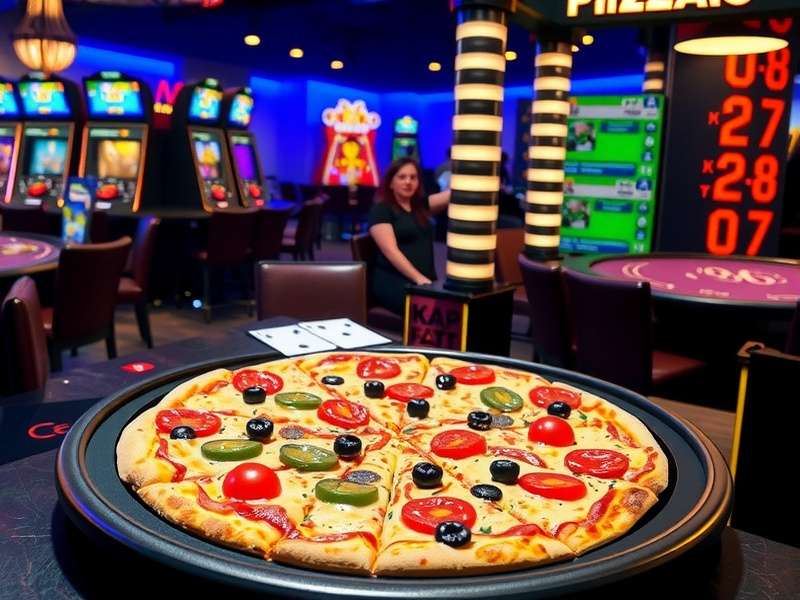
Today, Blackjack enjoys a rich digital life. Players can enjoy Blackjack Free games online, join Casinos Online for real stakes, or grab a Blackjack Pizza Near Me while watching the game. The spirit of 21 continues to evolve while honoring its deep American roots.
Key Milestones in Blackjack History
- 1600s: Spanish game "Trente-Un" (31) appears in literature.
- 1700s: French "Vingt-et-Un" becomes popular in Parisian casinos.
- 1800s: French colonists bring the game to New Orleans and the Mississippi riverboats.
- 1931: Nevada legalizes gambling; Blackjack flourishes in Las Vegas.
- 1956: First basic strategy published by the "Four Horsemen of Aberdeen."
- 1962: Edward O. Thorp publishes "Beat the Dealer".
- 1990s: Online casinos emerge, offering Blackjack Online Real Money.
- 2000s–present: Live dealer games, mobile apps, and Black Jack Online Free platforms explode in popularity.
3. 🃏 Official Blackjack Rules & Gameplay
Understanding the rules is the first step to mastering Blackjack. The game uses one or more standard 52-card decks. The goal: beat the dealer by having a hand closer to 21 without going over.
Card Values
- Number cards (2–10): Face value.
- Face cards (Jack, Queen, King): 10 points each.
- Ace: 1 or 11 points — whichever benefits the hand.
Basic Play Sequence
- Place your bet. Each player puts chips in the betting circle.
- Initial deal. The dealer gives two cards to each player and two to themselves — one face up, one face down (the "hole card").
- Player turns. Starting from the left, each player decides: Hit (take another card), Stand (keep current hand), Double Down (double bet, take one card), Split (if two same-value cards, split into two hands), or Surrender (forfeit half the bet).
- Dealer's turn. The dealer reveals the hole card and must hit until reaching 17 or higher. In most American casinos, the dealer stands on "soft 17" (a hand with an Ace counted as 11).
- Payout. If you beat the dealer (closer to 21), you win 1:1. A natural Blackjack (Ace + 10-value) pays 3:2 in most casinos.
Common Rule Variations
- Dealer hits soft 17: Increases house edge slightly.
- Double after split: Allowed in most but not all casinos.
- Resplit Aces: Some casinos allow splitting Aces only once.
- Surrender: Early or late surrender options affect player advantage.
For a complete walkthrough, see our guide on How To Play Blackjack.
4. 🧠 Blackjack Strategy: From Basic to Advanced
No Blackjack Wikipedia would be complete without a deep dive into strategy. Basic strategy is a mathematically optimized set of decisions that minimizes the house edge. Advanced players use deviations based on card counting and game conditions.
Basic Strategy Chart (Simplified)
Here are the core decisions for a standard 6-deck game where the dealer stands on soft 17 and double after split is allowed:
- Hard hands (no Ace or Ace counted as 1): Always stand on 17+. Hit 11 or lower. Double on 11 vs dealer 2–10. Double on 10 vs dealer 2–9. Double on 9 vs dealer 3–6.
- Soft hands (Ace counted as 11): Always stand on soft 19+. Double soft 18 vs dealer 3–6. Hit soft 17 or lower.
- Pairs: Always split Aces and 8s. Never split 10s, 5s, or 4s (except 4s vs dealer 5–6 in some games).
Advanced Strategy Concepts
True Count & Bet Spread
Card counters use the "True Count" (running count divided by remaining decks) to adjust bets and playing decisions. A higher true count favors the player — increase your bet. A low or negative count — bet minimum.
Deviations from Basic Strategy
When the true count is high, you might take insurance, stand on 16 vs dealer 10, or double 10 vs dealer Ace. These "index plays" add a small edge for skilled players.
For comprehensive training, check out Blackjack Strategy resources and practice with Blackjack Free games to hone your skills before risking real money.

5. 🔢 Card Counting Systems
Card counting is the most famous advantage-play technique in Blackjack. By tracking the ratio of high cards to low cards remaining in the deck, players can identify when conditions favor them and increase their bets accordingly.
Hi-Lo System (Most Popular)
- 2–6: +1 (low cards benefit the dealer)
- 7–9: 0 (neutral)
- 10, J, Q, K, Ace: –1 (high cards benefit the player)
Keep a "running count" as each card is dealt. Divide by the approximate number of remaining decks to get the "true count." A true count of +1 means you have a slight edge. At +2 or higher, increase your bet.
Other Counting Systems
- KO (Knockout): An unbalanced system — no true count conversion needed.
- Omega II: More complex, assigns different values to different cards.
- Wong Halves: A level-3 system with fractions — very accurate but difficult.
While card counting is legal, casinos reserve the right to ban counters. Always practice with Blackjack Free Offline games to build speed and accuracy before trying it in a live setting.
6. ♥️ Popular Blackjack Variants
Blackjack has spawned numerous variants, each with unique rules and side bets. Here are the most popular ones you'll encounter at American casinos and online platforms.
Classic American Blackjack
The standard 6-deck game with dealer standing on soft 17, double after split allowed, and late surrender. House edge: ~0.4% with basic strategy.
European Blackjack
Uses 2 decks. The dealer only gets one card initially (no hole card) — players cannot double or split until the dealer checks for Blackjack. House edge: ~0.5%.
Blackjack Switch
Players receive two hands and can swap the second card between them. This rule favors the player, so casinos add "push on 22" (if the dealer busts with 22, it's a push).
Spanish 21
Uses a 48-card deck (no 10s). Many liberal rules compensate: player can double any number of cards, late surrender, and bonus payouts for 5-card 21s.
Pontoon
A British variant where both dealer cards are face down. Player can "twist" (hit), "stick" (stand), "buy" (double), or "split." A five-card trick beats everything.
Explore these and more when you play Black Jack online or at land-based casinos. Each variant offers a fresh challenge.
7. 💻 Online Blackjack & Real Money Play
The digital revolution has made Blackjack more accessible than ever. Whether you're looking for Blackjack Free practice games or ready to wager Blackjack Online Real Money, there are platforms for every skill level.
Types of Online Blackjack
- RNG (Random Number Generator): Standard digital blackjack — quick, available 24/7, and great for practice.
- Live Dealer: Real human dealers streamed from studios. You can interact, watch the shuffle, and enjoy authentic casino atmosphere from home.
- Mobile Blackjack: Optimized for smartphones and tablets. Play Black Jack Online Free or real money on the go.
Choosing a Safe Online Casino
When playing for real money, always verify licensing (e.g., New Jersey Division of Gaming Enforcement, Pennsylvania Gaming Control Board). Look for SSL encryption, fair RNG certification, and positive player reviews. Our recommended Casinos Online list provides vetted options for American players.
Bonuses & Promotions
Many online casinos offer welcome bonuses — but read the terms. Blackjack often contributes only 10–20% to wagering requirements. Some casinos exclude Blackjack entirely from bonus play. Check the fine print before depositing.
For casual fun, try Blackjack Free Offline apps — perfect for practicing strategy without an internet connection. And don't forget to take a break and grab a Blackjack Pizza Near Me after a long session! 🍕
8. 🏆 Blackjack Tournaments
Tournament Blackjack is a different beast. Instead of beating the dealer, you compete against other players to accumulate the most chips over a set number of hands. Strategy shifts dramatically — you might take bigger risks to catch the leader or play conservatively to protect a lead.
- Elimination Tournaments: Players with the lowest chip counts are eliminated at regular intervals.
- Survivor Tournaments: Chip counts reset each round; the goal is to have more than the elimination threshold.
- Progressive Tournaments: Players move through multiple rounds, with top scorers advancing.
Major casinos in Las Vegas and Atlantic City host regular tournaments. Online versions are also popular — check our Blackjack Online Real Money section for upcoming events.
9. 🎩 Blackjack Table Etiquette & Tips
Playing Blackjack in a brick-and-mortar casino comes with unwritten rules. Respect them, and you'll be welcomed back.
- Hand signals: Always use hand signals (not verbal) for hit/stand — cameras need to record your decisions.
- Don't touch your chips during a hand. Wait until the round ends.
- Tipping the dealer: Common to tip when you're winning. A $5 bet for the dealer is standard.
- Know the rules before you sit: If you're unsure, ask the dealer — they're usually happy to help.
- Cell phone use: Most casinos prohibit phones at the table.
For beginners, we recommend starting with How To Play Blackjack and practicing with Blackjack Free games before heading to a live table.
10. ❓ Frequently Asked Questions
What is the best Blackjack strategy?
Basic strategy is the foundation. It tells you the mathematically correct play for every hand. For most players, memorizing basic strategy reduces the house edge to under 0.5%. For advanced players, card counting adds a further edge.
Is card counting legal?
Yes, card counting is legal. It's a mental skill, not a device. However, casinos are private businesses and can ban counters if they detect them. Use discretion and avoid being obvious.
Can I play Blackjack for free?
Absolutely! Visit Blackjack Free Offline or Blackjack Free for no-risk practice. Many online casinos also offer "demo mode" for real-money games.
What's the difference between Blackjack and 21?
None — they're the same game. "21" is the goal, while "Blackjack" specifically refers to an Ace + 10-value card, but both terms are used interchangeably.
How do I find Blackjack near me?
Use online casino finders or check state gaming commission websites. And if you're looking for a snack, we can't help with Blackjack Pizza Near Me — but we hope you find both! 😄
What is the house edge in Blackjack?
With basic strategy, the house edge ranges from 0.2% to 1.0% depending on the specific rules (number of decks, dealer stands on soft 17, double after split, etc.). The best games for players are 3:2 Blackjack with a single deck and favorable rules.
Search Blackjack Wikipedia
User Comments & Discussion
Share your Blackjack experiences, ask questions, and connect with other players.
Thank you for explaining card counting so clearly. I practiced with the free games and now I'm ready to try a live table!
I'd add that the Hi-Lo system is great for beginners, but for serious play, consider the Omega II. Also, always check the rules — some casinos have dealer hits soft 17 which kills your edge.
Rate This Blackjack Guide
Help other players find the best content. How would you rate our Blackjack Wikipedia?
Great article! I've been playing Blackjack for 15 years and this is one of the most complete guides I've seen. The strategy section is spot-on.