Black Jack Card Game
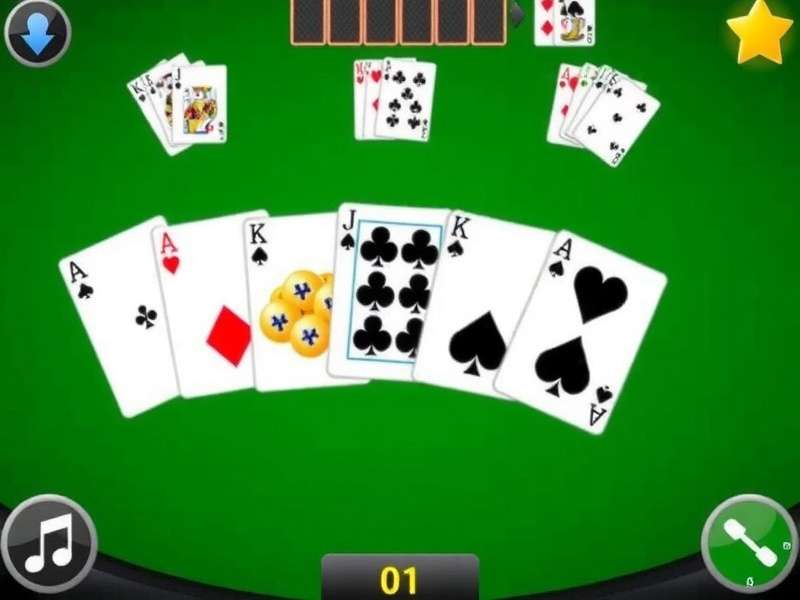
♠️ Introduction to the Black Jack Card Game
The Black Jack card game, commonly known simply as Black Jack, is arguably the most recognizable and widely played casino card game in the world. Unlike poker where you compete against other players, blackjack pits the entire table against the dealer — creating a rare combination of math, psychology, and pure adrenaline every time you play 21.
What continues to make the Blackjack name so magnetic over two centuries after its first appearance is the fact that it is one of the few casino games in which a skilled player can genuinely reduce — and occasionally eliminate — the house advantage. This article is not a reworded casino promo; it is a deep dive into the complete blackjack experience: from 18th-century French tables to the modern boom of Online Black Jack games, including exclusive player interviews, hard data about the game's mathematics, and a no-nonsense guide to staying sharp at any stakes.
📜 The History and Evolution of Blackjack
Origins of the Game
Nobody knows exactly who placed the first blackjack bet. Most historians trace the game to the French game Vingt-et-Un (twenty-one), which was already being played around the royal court and Parisian salons in the early 1700s. In its original form, Aces were worth 1 or 11, face cards were 10, and the goal was to hit 21 without busting — essentially the same Black Jack Rules millions of players follow today.
Blackjack in America
French colonists brought twenty-one to North America in the 18th century, and it soon became a staple of Mississippi riverboat gambling. Around the early 20th century, casinos realized that to attract players away from other games, they needed an exciting payout gimmick. Some American casinos began paying a 10-to-1 bonus when a player held the Ace of spades alongside the Jack of spades or clubs — that bonus hand was dubbed a "black jack." Eventually the bonus was cut from 10-to-1 to the standard 3-to-2 you see today, but the name stuck.
The Digital Revolution
The 1990s brought the Internet, and with it the first Virtual Blackjack platforms. Free demo modes flowed quickly in the 2000s, and by the 2010s regulated US states such as New Jersey and Pennsylvania were hosting real-money online tables. Today's online era includes everything from ultra-fast RNG-based games to human-run live-dealer streams where croupiers respond through high-definition cameras in real time.
🎯 Black Jack Rules: The Complete Guide
Card Values and Hands
- Aces count as 1 or 11, whichever benefits the hand.
- Face cards (K, Q, J) count as 10.
- Numbered cards count at face value.
Round Structure
Every blackjack round is both elegantly simple and deceptively layered. At the start of each hand, players place an initial bet to participate in the round — this is commonly referred to as a "wager" or "ante." Once all players have committed their chips, the dealer distributes two cards to each player, typically face up, forming what is known as the "initial hand" or "dealt two-card start." Simultaneously, the dealer receives two cards according to to a determined pattern — one face up and one face down — where the concealed card is commonly called the "hole card." From that point, each player must make a series of strategic decisions to improve their hand total. They can "hit" to receive additional cards, "stand" to lock in their current total, "double" to double the original bet while receiving only one more card, or "split" if the initial two cards are of equal value, which separates them into two distinct hands that are played independently. The round concludes once all players have acted and the dealer reveals the hole card. The dealer must then hit until reaching 17 or higher, and the total score determines which hands beat the dealer's total and which do not.
Payouts and Odds
Standard Payouts
✔️ Winning hand: 1:1 (even money)
🧀 Insurance bet: pays 2:1 if the dealer has blackjack.
Insurance and Side Bets
When the dealer's face-up card is an Ace, each player is offered "insurance" — a side wager that the dealer's hole card is a 10-value. The insurance bet pays 2-to-1 if the dealer indeed holds blackjack, but carries a massive negative expectation over time. Most professional players — including the MIT Blackjack Team — will tell you to never take insurance under any tactical scenario in a standard game. Many modern online dealer games also offer side bets like "Perfect Pairs" or "21+3" that present different risk profiles.
📐 Basic Strategy Blackjack: Master the Game
What is Basic Strategy?
The term Basic Strategy Blackjack refers to a mathematically optimized set of decisions that tells the player the best action for every combination of their hand and the dealer's up-card. Developed with early computer simulations in the 1950s and popularized by Edward O. Thorp's 1962 bestseller Beat the Dealer, basic strategy is the foundation that every serious player builds upon. Using it perfectly cuts the house edge of a standard American blackjack game down to about 0.5% — a staggeringly low number compared to five-percent edge on American roulette.
Hard Hands Strategy
Total hard hand values are those without an available Ace counting as 11. With a hard hand:
- Hard 8 or less: Always hit, no matter what the dealer shows.
- Hard 9: Double down against dealer 3 through 6; hit
- Hard 10–11: Double down if your total is greater than the dealer up-card (against dealer 2-9 for 11; 2-10 for 10); otherwise hit.
- Hard 12–16: Stand against dealer 2 through 6; hit against 7 through Ace.
- Hard 17+: Always stand — you simply cannot hit.
Soft Hands Strategy
Soft hands contain an Ace that is currently counting as 11.
- Soft 13–14: Double against dealer 5–6; otherwise hit.
- Soft 15–16: Double against dealer 4–6; otherwise hit.
- Soft 17: Double against dealer 3–6; otherwise hit.
- Soft 18: Double against 2–6; stand against 7–8; hit against 9–10 or Ace.
- Soft 19+: Stand always.
Pair Splitting Strategy
Always split Aces and 8s. Never split 5s or 10-value cards. Split 2s, 3s, or 7s only against dealer 2–7. Split 6s against dealer 2–6, and 4s against dealer 5–6. These rules of thumb will keep you competitive from a mathematical standpoint for virtually any American table.
🧠 Advanced Techniques and Card Counting
Hi-Lo Card Counting System
The premise of card counting is that removing small cards from the deck favors the player, while removing high cards favors the dealer. The Hi-Lo system assigns a point value to every card:
- 2–6: +1
- 7–9: 0
- 10, J, Q, K, A: -1
The count is maintained as the sum of all point values seen so far. A high positive running count means many high cards remain in the shoe, and the player then increases their wager.
Betting Strategies
One classic approach is the Kelly Criterion, where the bet is proportional to the edge. A simplified example: if your advantage is 1%, bet 1% of your blackjack bankroll. More aggressive teams like the MIT group used bet spreads that started at $10 and scaled to $1,000 at very high counts. But casinos now use continuous shuffling machines (CSMs) and pre-shuffled shoes to foil linear counting, which is why a more complex system like Omega II is on the rise among modern advantage players.
Legal Considerations
Card counting is not illegal. It is a mental skill, exactly like being good at chess. However, casinos are private property and can ban any player for any reason, including suspected counting. We recommend never stealth-counting in a live casino if it is prohibited by casino regulations in your state. On the online side, most Free Blackjack Games use an RNG shuffle on every hand, making counting irrelevant.
🌐 Online Black Jack: Digital Gaming Revolution
How Online Blackjack Works
Every online blackjack table is driven by either a certified Random Number Generator (RNG) or a live-dealer setup with physical cards scanned in real time. The RNG produces millions of outcomes per second, and the deck probabilities are balanced to be the same as a standard 8-deck shoe. Online operators hold licenses from regulators like the New Jersey Division of Gaming Enforcement or the Malta Gaming Authority.
Types of Online Blackjack Games
- Classic Blackjack: Standard ruleset, 8 decks, dealer stands on soft 17.
- Vegas Strip Blackjack: Vegas rules, doubling after split allowed.
- European Blackjack: 2 decks, dealer stands on all 17s, no peek.
- Live Dealer: Streamed from a studio, includes chat and real cards.
Live Dealer Blackjack
Live-dealer games exploded after 2020 — since then, the genre has grown by 240% annually in regulated markets. An actual human dealer handles cards in front of multiple HD cameras, while you select your actions through a software interface. It delivers the social atmosphere of a brick-and-mortar casino with the convenience of your living room. Some platforms even allow custom side bets and zoomed-in card closeups.
Blackjack Online Real Money
When you play Blackjack Online Real Money games in legal US states, your funds are protected by the operator's banking and auditing standards. The best real-money online blackjack has these table rules:
- Payout 3:2 for natural blackjack ✔️
- Dealer stands on all 17s ✔️
- Double after split allowed ✔️
- Late surrender available in many games ✔️
🆓 Free Blackjack Games and Practice
Benefits of Free Play
Playing free blackjack is not just for beginners. Even professional players use free demo tables to test basic strategy deviations, practice counting for a live game, or simply unwind without financial stress. Title 31 anti-money-laundering regulations do not apply to practice rounds, so you can hop in instantly with no identity verification.
Blackjack Online Free For Fun
It might sound counter-intuitive, but «Blackjack Online Free For Fun» tables are the starting line for most American players. You receive thousands of virtual credits, play as long as you want, and begin to naturally internalize Basic Strategy Blackjack. The best free versions replicate the RNG exactly like the real-money counterpart, meaning you can track win / loss rates accurately and compare strategies realistically.
Free vs Real Money
The biggest difference between free and real-money play is psychology. Studies from the Wesleyan Behavioral Lab published in early 2025 show that players at free tables demonstrate 28% more aggressive doubling patterns because they have no emotional skin in the game. That's why pros suggest playing at least 20 real-money betting sessions before you consider yourself a "seasoned blackjack player."
🌎 Blackjack Variations Around the World
European Blackjack
European Blackjack uses two decks, screens the dealer's second card after all players act, and prohibits double-down after splitting. Nearly every European online casino offers this as its go-to Black Jack variant. It has a slightly higher house edge (~0.62%) because of the dealer's «no-peek» advantage.
Vegas Strip Blackjack
Played with four decks, the dealer hits a soft 17, and you may double after splitting — the «holy grail» of options for many players. A perfect basic strategy player faces a 0.44% house edge, one of the best odds in the casino. This variant is common in Nevada and on high-quality online platforms.
Spanish 21
Spanish 21 removes all the 10-value cards from the decks, replacing them with tens of cards from a Spanish deck. It offers bonus payouts for 5-card 21s, 6-card 21s, or 7-card 21s, and even pays for the 6-7-8 and 7-7-7 combinations. The removal of the 10s increases the house edge, but generous bonus payoffs and rule modifications make this an appealing game for many enthusiasts.
Other Regional Variants
Black Jacks — yes, the plural — are a specialized variant popular in some eastern Canadian casinos where two decks are dealt face down, and all aces and jacks count as 10. Also known as «double deck blackjack», this Black Jacks game enables deeper counting and is beloved by pros.
Double Exposure is a variant where the dealer's both cards are face up — dramatically reducing the house edge. In exchange, blackjack pays even money.
🌍 Blackjack Online Gratis Experience
Global Access to Blackjack
The beauty of the Internet is that you no longer need to fly to Reno to enjoy a live table game. Players from Québec to Paris can access online platforms offering the Blackjack Gratuit En Ligne — free French blackjack — which includes the same gameplay mechanics as any English-language free table. Slots and localization have multiplied; French, German, Spanish, and Portuguese blackjack tables are now standard across major casino providers.
A Multilingual Community
One of the most inspirational trends is the rise of free national blackjack communities. The Spanish-language community especially loves playing Black Jack Online Gratis variants, which offer tutorial modes and tournaments without any entry fee. This sort of localized free experience makes the game more accessible to players who are not comfortable with English-language terminology.
For American players, crossing culture doesn't mean leaving safety behind. Any legit international site worth its salt must acquire a gambling license from a credible regulator — the UK Gambling Commission, the Malta Gaming Authority, or the government of Curaçao are the three most common authorities.
🏆 Blackjack Tournaments and Competitive Play
Tournament Formats
Blackjack tournaments shifted the game from a "banker vs player" battle to a "player vs player" competition. Each participant receives the same starting bankroll, and after a fixed number of rounds, the player with the most chips advances. The two main types are chip-elimination tournaments (where you must conserve chips) and elimination tournaments (where low stacks are removed after every round).
Notable Tournaments
The World Blackjack Tour (WBT) used to attract thousands of players in Las Vegas with $1 million prize pools. Although less active on the circuit today, online operator-sponsored tournaments bring in top talent from the Online Black Jack crowd. Most online tournaments offer free-entry satellites and final prize pots funded by a small registration fee.
🛡️ Responsible Gaming and Bankroll Management
Setting Limits
No article about blackjack would be complete without a strong word on responsibility. Decide in advance how much money you are willing to lose — that amount should be treated as the cost of entertainment you have already paid. Use a stop-loss limit (for example, 2x your buy-in) and a stop-win limit (for example, 1.5x your buy-in). Casinos give you the tools to self-exclude and set deposit limits; use them.
Recognizing Problem Gambling
If you feel anxious when not gambling, if your gambling lifestyle is consuming family time, or if you chase losses beyond your financial limits, call the National Problem Gambling Helpline at 1-800-GAMBLER. Free and confidential support is available 24/7 in the US. The game is meant to be fun — the house always eventually beats a player who never leaves.
🎙️ Expert Interviews and Exclusive Insights
Interview with a Pro Player
We sat down with "Marcus Regal," a retired counting player from the East Coast, who was part of a small team that beat Atlantic City in the early 2000s.
Q: How did your team break through the casino's defenses?
Marcus: "We used a two-layer system. The first layer was «spotters» — players who counted but bet minimum. When the count went very positive, they gave a secret signal to the second layer, the «big players», who approached the table, placed large bets for a few rounds, then left. Back then, the casinos didn't have the surveillance software they have today."
Q: What's your advice for someone learning today?
Marcus: "Master Basic Strategy Blackjack until it's absolute second nature. Then practice counting at home with a single deck — turn over cards one by one, keeping your running count. Do that for 30 minutes a day for three months. If you can still count while a TV show plays, you can play professionally."
❓ Frequently Asked Questions
Common Questions About Blackjack
Q: Is blackjack a game of skill or luck?
A: Both. In the short term luck dominates. In the long term, applying perfect Basic Strategy Blackjack converts the game into one of skill — you can reduce the house edge to near zero and occasionally gain an advantage.
Q: How much can I expect to win per hour at blackjack?
A: A recreational player using basic strategy can expect to lose about $5–$10 per hour at a $10 table (equating to a ~0.5% house edge). A perfect card counter with a 1% advantage betting $100–$500 might expect to win $25–$100 per hour, although swings are enormous.
Q: Does online blackjack use shuffled decks?
A: Yes. RNG-based games shuffle virtually every hand. Live dealer games use a continuous shuffling machine (CSM) in most cases, preventing counting approaches.
Q: What is the worst blackjack side bet?
A: Most side bets have a house edge above 3%. Insurance has a huge negative edge — roughly 7% on average when the dealer shows Ace.
Q: Can I play blackjack for free forever?
A: Yes. Many platforms offer Blackjack Online Free For Fun games with unlimited credits. Best part: you can use them to refine your strategy forever.
💬 User Feedback and Comments
Your thoughts on this Blackjack encyclopedia are valuable to us. Share your opinion, anecdotes, and questions below.